 01 / Scale
Relevant work was hard to find.
Thousands of records across organizations made it difficult to isolate the work a team actually needed.
From governed business-unit independence to AI-powered onboarding. A platform strategy that reduced onboarding from months to days in the prototype/pilot.
280-day baseline from New Relic observability. Under two weeks measured in the combined EWD + OTTO prototype/pilot. Production is planned for early 2027; the workflow is not live yet.
As Strategic Portfolio Management expanded from IT into HR, Finance, Operations, and GTM, admins were managing thousands of records and configurations in one shared environment. Different organizations needed different rules, but the platform did not give them a simple model for that independence.
New Relic observability showed an average of 280 days from setup to first use in Project Workspace. For a subscription platform, this was more than admin friction: customers were spending much of their first year implementing before teams could use what they had bought.
01 / ScaleThousands of records across organizations made it difficult to isolate the work a team actually needed.
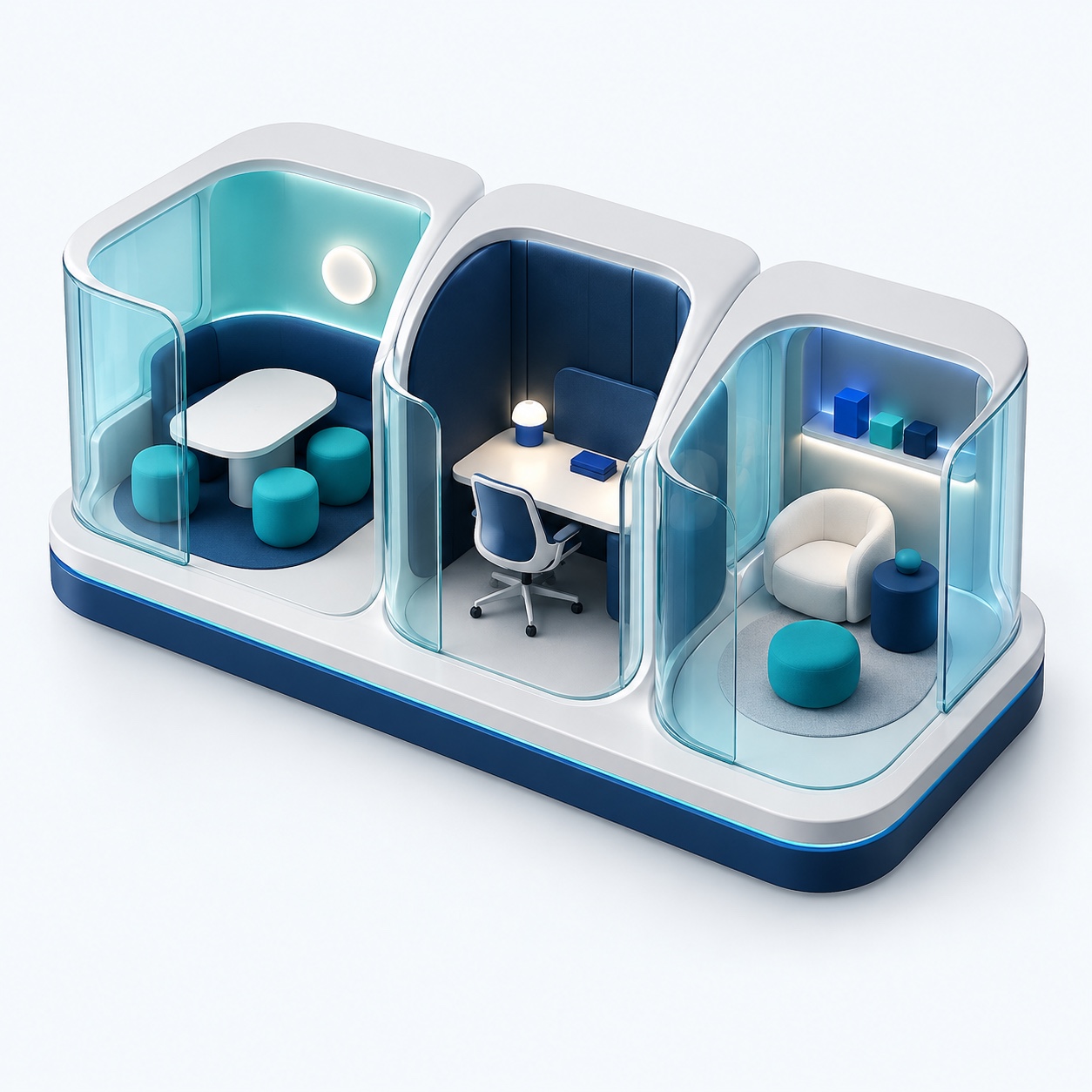 02 / Separation
Business units needed their own visibility, layouts, processes, and data requirements without creating separate environments.
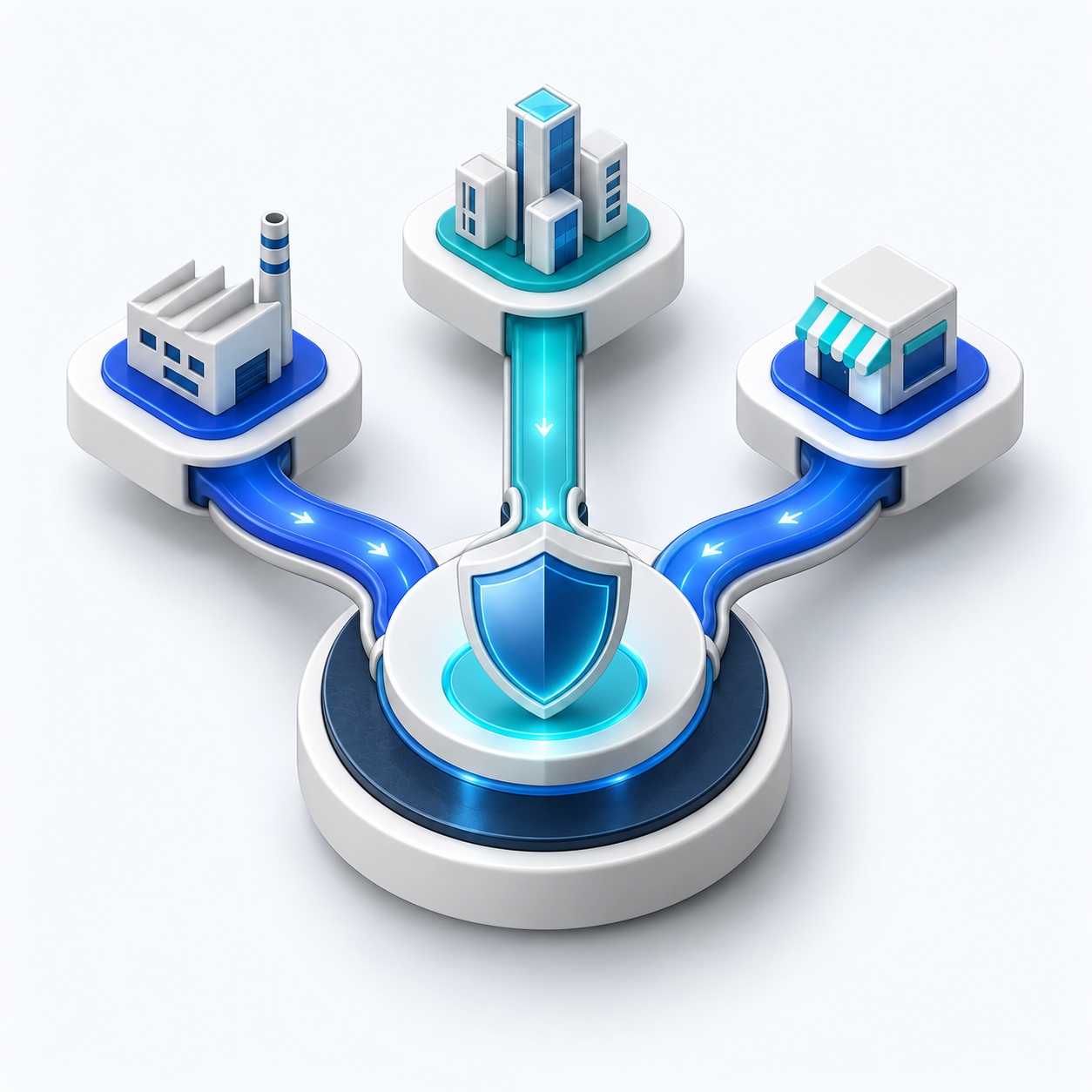 03 / Governance
One-off customization risked fragmented configuration, maintenance overhead, and inconsistent reporting.
My role was to turn these overlapping requests into an experience strategy: define where business units needed control, what had to remain shared, and how admins could understand that boundary.
At a roundtable with hundreds of admins, the request sounded simple: “Can we please scope access?” But HR did not want to work like IT. Teams needed different processes, data, and access without affecting everyone else.
The platform lacked a simple mental model for organizational independence. Better filtering alone would not solve that.
I triangulated customer needs, recurring deployment friction, technical constraints, and enterprise planning patterns to understand what needed to be independent—and what had to remain shared.
Relevant work gets lost across organizations.
Business units need different ways to work.
Onboarding and configuration slow deployment.
Look for patterns across customers.
Preserve access controls and upgradeability.
Avoid one-off configuration systems.
Compare local control with central governance.
The opportunity is governed variation.
| Model reviewed | Pattern identified | Question for EWD |
|---|---|---|
| Shared environment + filtering | One environment; narrow the visible records. | Does a filtered view create a durable business-unit boundary? |
| Salesforce | Org + app model. | How can local configuration coexist with centralized governance? |
| Aha! | Workspace model. | Where should team-level configuration live? |
| Jira Align | Role + team model. | How do roles and team context shape access and experience? |
| Planview | Enterprise model. | How does local variation roll up into enterprise planning? |
Comparison lens: permissions, local configuration, workflows, data variation, and enterprise governance.
Across Salesforce, Aha!, Jira Align, and Planview, I compared local control with central governance. The opportunity was meaningful local variation while preserving one enterprise model.
The four pillars defined the scope of independence. Each became a concrete set of admin decisions and downstream consequences—not four separate customization systems.
Who can see what?
What should they see?
How should work happen?
What does the work require?
HR should work like HR.
Finance should work like Finance.
The platform should still work as one.
Local autonomy needed to coexist with shared data, reporting, governance, and upgradeability. I used that tension as a decision rule: reject concepts that increased local flexibility by weakening the shared platform, and reject concepts that preserved governance by forcing every business unit to work the same way.
I evaluated three approaches against local independence, platform integrity, and admin cognitive load.
 01 / Filtering & culling
Fast, familiar ways to narrow records.
No durable organizational boundary. Admins still manage context manually.
 02 / Scoped spaces
Greater local autonomy for each business unit.
Configuration, governance, and reporting can fragment over time.
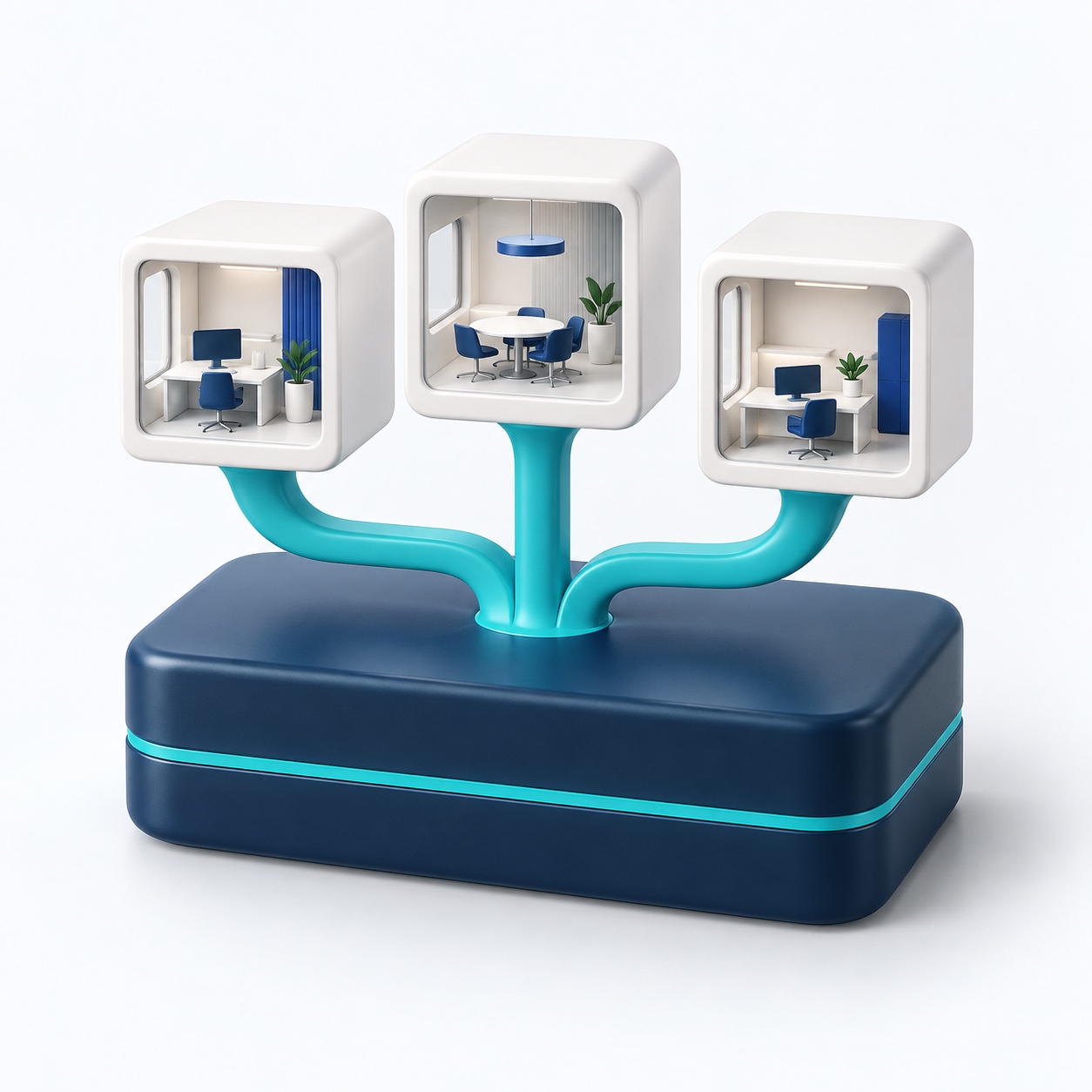 03 / Partitioned model · Selected
Durable boundaries within one shared platform.
More platform and setup complexity, in exchange for less ongoing context management.
I chose the partitioned direction because it moved repeated context management out of the admin’s daily work and into a governed model. The cost was higher platform and setup complexity; the benefit was a durable boundary that could support all four dimensions of independence.
Project Workspace touched resources, financials, risk, workflows, approvals, and reporting. Starting here made the dependencies tangible and gave the model a meaningful test of whether it could extend across SPM.
Configuration Hub brings discovery and product setup into one place. The next step is specific to the product, without losing the shared platform context.
Create a partition, choose its owner, and inherit a baseline. The overview keeps the business context visible as configuration becomes more detailed.
Ownership, membership, and the parent configuration stay explicit.
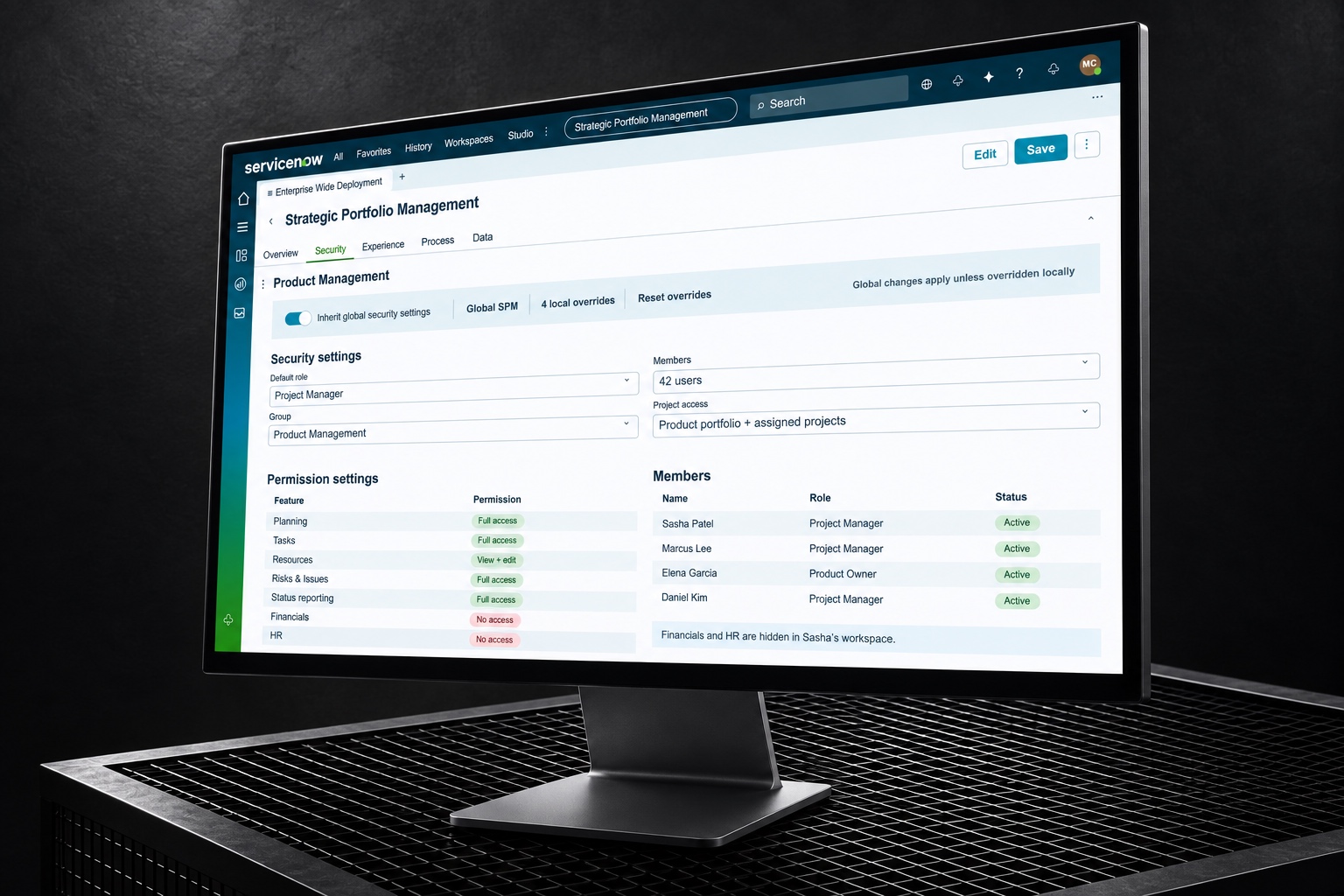
The prototype follows Maya, an enterprise admin, and Sasha, a project manager. Maya starts from a global baseline, configures a partition across the four pillars, and previews the experience before handing it over.
Sasha sees the result: relevant projects, appropriate navigation, and the fields and process her work requires. She does not need to understand the configuration that produced it.
Access and presentation are separate decisions. Set the permissions, then shape the navigation and dashboard that people actually use.
Roles, inherited permissions, and local overrides explain who can reach the work.
A hidden module and a permission boundary are different decisions. The model makes both explicit.
Views, navigation, fields, and layouts resolve from the configuration relevant to the business unit.
Playbooks, stage gates, and approval steps can vary while remaining part of the shared platform.
Local attributes support different work without abandoning the enterprise foundation.
My contribution was connecting customer needs to a model that could be discussed across disciplines. Customer Success brought recurring deployment friction; Platform and Engineering brought existing capabilities, maintainability, and upgrade constraints. The four pillars made those inputs part of the same set of decisions.
For each request, the question became explicit: what can a business unit change, what must remain shared, and what will the person doing the work experience? The prototype connected admin configuration to the downstream workspace so that the consequences could be reviewed together.
Start with the baseline, configure a business-unit partition, then preview the member experience. The prototype connects the decisions shown above.
Open interactive prototypeEWD defines what a business unit can configure. The next phase connects that model to OTTO: the admin supplies the documentation, and OTTO turns those requirements into onboarding that can be reviewed and launched.
Admin knowledge OTTO orchestrationApproved execution
The admin supplies discovery findings, onboarding documentation, the four configuration pillars, and workflows for each division.
OTTO connects the supplied material to security, experience, process, and data. The proposed flow makes unclear or conflicting requirements visible before configuration proceeds.
OTTO uses the requirements to prepare division-specific configuration and an onboarding workflow. The plan connects the shared baseline to each division’s local needs.
The admin reviews the plan, checks local exceptions, and confirms what will change. This carries forward OTTO’s thinking-versus-acting model: show the reasoning, then ask for approval.
OTTO creates and launches the approved onboarding workflow for the division. The admin can follow execution and address exceptions instead of rebuilding the entire setup manually.
Execution stays connected to the approved requirements.
A proposed visualization of the pre-launch workflow. Example divisions and review states explain the process; they are not screenshots or a live integration.
The combined EWD + OTTO prototype/pilot reduced onboarding from 280 days to under two weeks. Production has not launched; the planned release is early 2027.
The connection to my earlier OTTO work is the interaction principle: distinguish thinking from acting. The admin can understand the proposed plan before OTTO executes it. EWD supplies the governed structure; OTTO applies it to discovery and onboarding.
Observed setup-to-first-use baseline in Project Workspace.
Measured result in the combined EWD + OTTO prototype/pilot.
Planned production launch. The combined workflow is not live yet.
The first part established the configuration model: meaningful business-unit independence across security, experience, process, and data. The second part connected that model to OTTO, turning division documentation into an actionable onboarding plan.
The prototype/pilot demonstrated the time reduction. The next success bar is production: sustain that speed while preserving access boundaries, reporting consistency, upgradeability, and clear admin control.
The initial request sounded like a filtering problem. Research made it a question about organizational independence. That shift changed the scope of the design and the kind of system we needed to build.
The highest-leverage decision was defining where independence should stop.