Scan
Start or resume with a personal code.
An in-store system that connected physical products, virtual try-on, personal identity, and MAC artists—without turning the store into a kiosk.
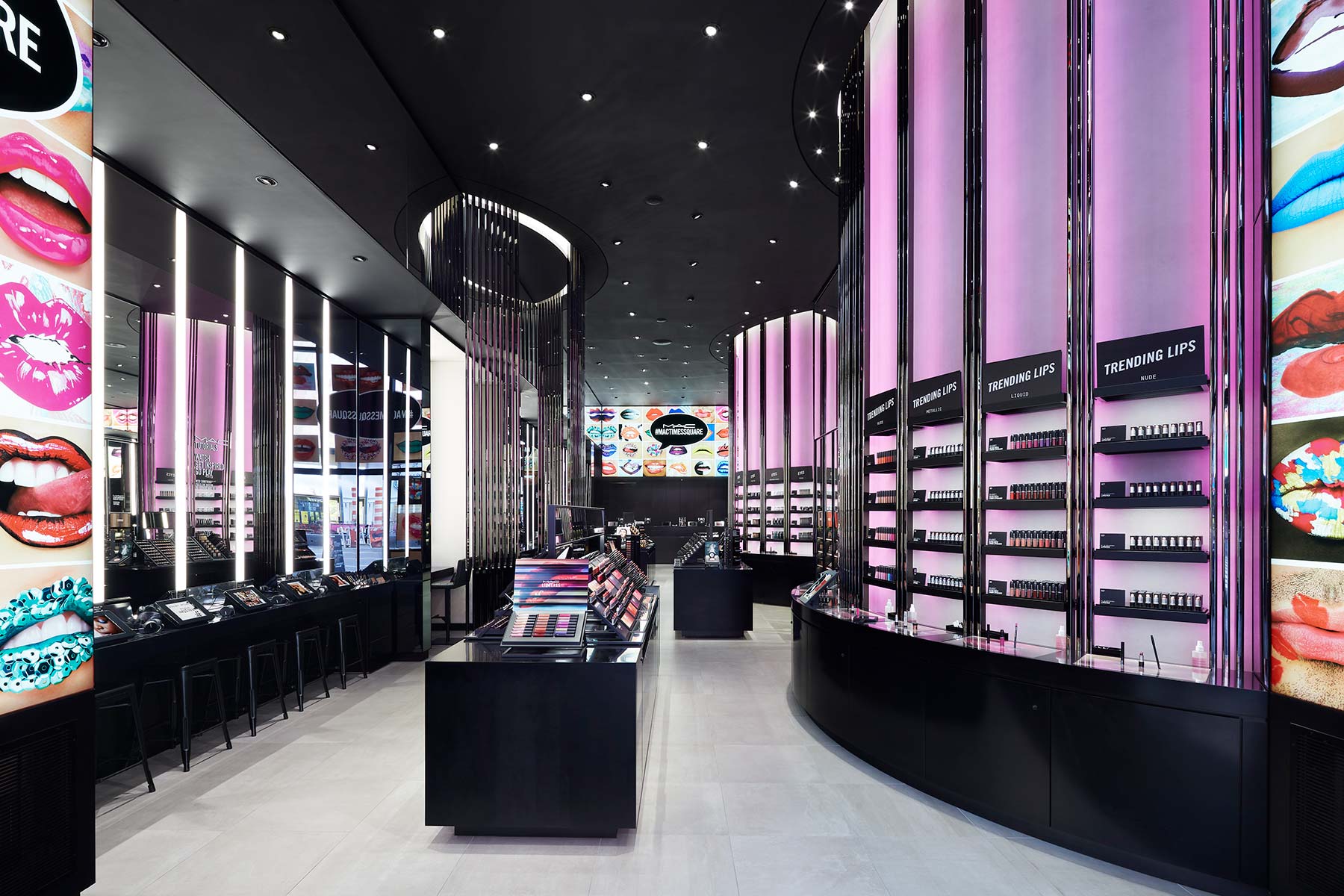
Beauty retail works because people explore: pick up a product, compare a shade, ask an artist, try a look, change their mind. Digital tools could add confidence—but only if the experience remembered what happened from one moment to the next.
How might the store recognize a customer’s intent without replacing the artist or the product?
The experience work began with the retail environment and the moments where physical and digital behavior could meet.
The concept had to make a large, expressive catalog easier to explore without flattening it into filters.
The organizing idea was MAC Pass: a personal QR code that could identify the customer at Lips, Eyes, and Face stations, carry preferences between them, and move saved products back to the customer’s phone.
Start or resume with a personal code.
Try products, shades, and complete looks.
Carry selections across every station.
Send favorites and the session to mobile.
Saved looks and products leave the store with the customer instead of disappearing when a station resets.
The station closes the loop with save, buy, continue, or end—keeping the customer in control.
The work explored distinct experiences rather than one generic touch interface. Lip Library organized color and virtual try-on. Artist Studio started with complete looks and the artists behind them. Each station had its own personality while sharing identity, navigation, and save behavior.
The physical product remains the invitation; MAC Pass adds continuity for customers who want it.
Color families give structure to a dense catalog while preserving the visual energy of the brand.
Looks and artist authorship create a more human path into discovery than a standard product grid.
The voice prototype tested a more natural way to begin: speak a shade, see it applied, compare the result, and move into product detail. Each response keeps the customer oriented without competing with the makeup.
The original voice demo shows the full interaction—from prompt to virtual try-on to a product decision.
The circular stations made the interface visible and approachable while preserving open sightlines to products and makeup artists.
Lips, eyes, face, and Art Studio shared one spatial language instead of reading as separate kiosks.
MAC Pass is an accelerator, not a gate.
Digital starts from what the customer is already doing.
The system removes repetition while preserving choice.
Saved preferences help a conversation start further ahead.
It helps a customer compare color quickly, then return to the product and the artist with more confidence.
The Queens Innovation Lab brought together MAC Pass, virtual try-on, interactive stations, personalization, and artist service in one store. Public reporting described the results at program level—not as the impact of a single interface or contributor.
Source material: project decks supplied for this case study plus the public Valtech and Forbes accounts. Metrics describe the broader store program.
The strongest idea was not any single screen. It was continuity: the same customer could move between product, station, phone, and artist without starting over.
The digital layer worked when it made the physical experience more fluid—and the human experience more informed.