The Problem
TurboTax had spent four decades perfecting DIY tax software — and it worked. The product was genuinely good. But 60% of Americans still filed with a human accountant, not because the software was hard to use, but because the stakes were too high to go it alone. Tax filing peaks between 8pm and midnight in February. That's when a filer hits a question they can't answer — a rental property deduction they're unsure about, a 1099-G they've never seen before, an error code with no path forward. At that moment, the only options were to guess, abandon, or drive to H&R Block tomorrow. TurboTax had broken links — friction points where the software ended and a human being needed to begin — and no product existed to bridge that gap.
The brief wasn't to improve the UI. It was to invent a new category: on-demand access to a real credentialed tax professional, embedded directly in the filing experience, at the exact moment a customer needed one. We weren't improving a product — we were designing a two-sided service that had never existed before.
The trust gap: 60% of Americans chose human tax pros despite strong DIY software — the failure wasn't the product, it was the absence of a human fallback at the moment of maximum anxiety
Research & Discovery
We ran research weekly — roundtables with current filers, sessions with tax professionals, and a practice we called "Follow Me Home": we went to people's houses and sat with them as they actually filed. No lab, no moderation script. We watched real people, in real environments, at real moments of confusion. We built hypotheses before each session, recorded every interaction, and debriefed immediately after.
The pattern was precise. Filers moved through the software confidently until a specific class of question appeared — edge cases with nuance, deductions they weren't sure about, situations the interview couldn't fully capture. In every case, the body language shifted: they leaned back, Googled, called a parent, or abandoned. The need was never "better help text." It was a human being who could say "yes, you qualify for that" with professional certainty.
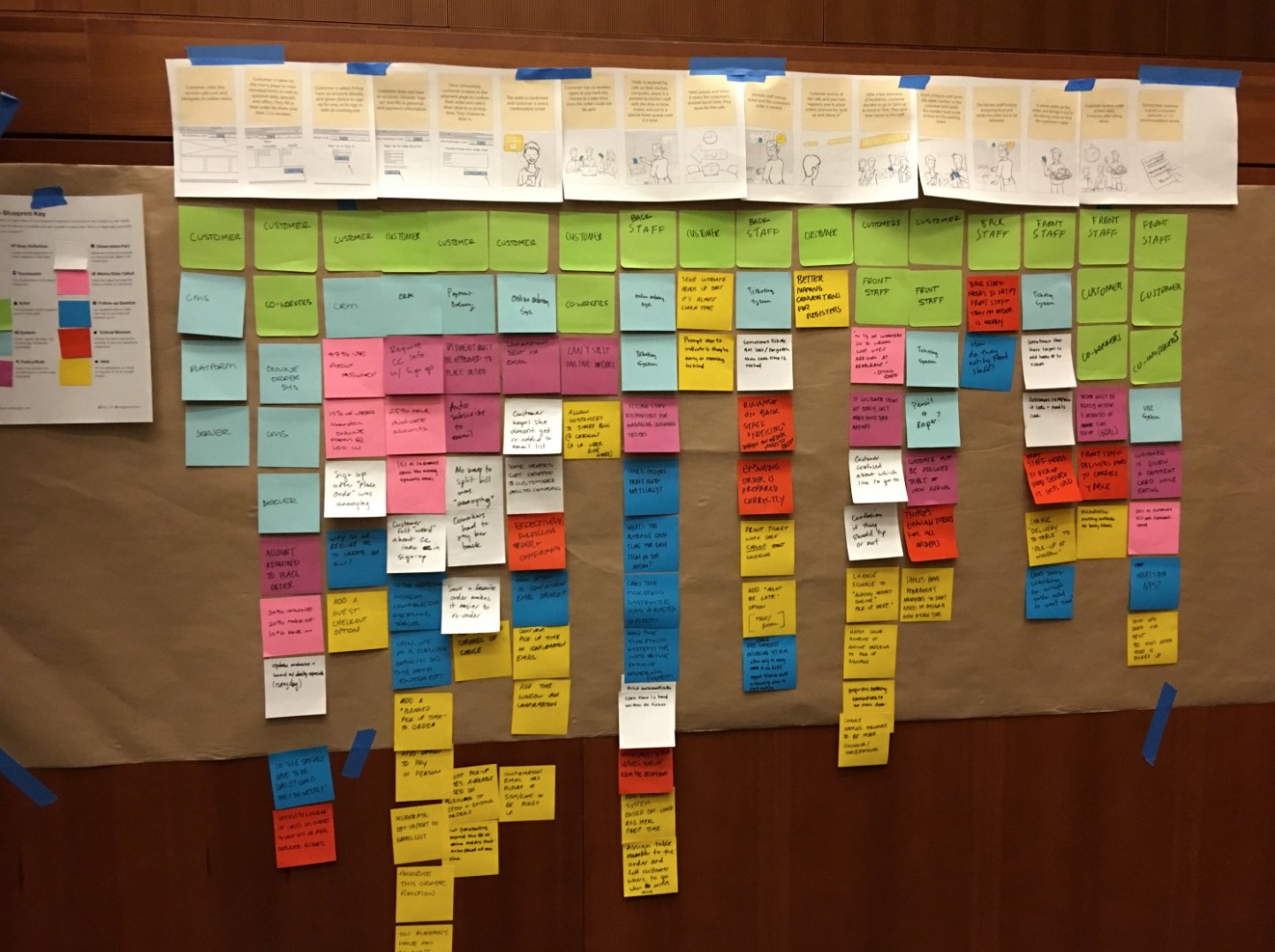
The actual service blueprint workshop — every touchpoint mapped from the customer filing journey to the backstage CPA infrastructure, using front stage / line of visibility / back stage methodology
Design Process
Three of us built TurboTax Live: a product designer, a director, and a content designer — and our amazing tiger team of engineers who rolled up their sleeves and got to work. The first and most important decision was to treat this as a service, not a feature. That meant a full service blueprint — front stage (every touchpoint the customer sees), the line of visibility, back stage (every CPA-side workflow), and the support systems underneath. Two products had to work in parallel. Every customer interaction needed a corresponding CPA experience to match it. The moment a filer tapped "Talk to an expert," a CPA somewhere received a session with full context already in hand: the customer's filing state, their specific question, their tax situation.
We ran the POC in a single tax season with a small pool of credentialed CPAs. Every design decision was hypothesis-driven — build, put it in front of real filers, measure the handoff moments, iterate weekly. The SmartLook feature — screen annotation during a live session, so a CPA could literally circle the field the customer was confused about — came directly from watching filers try to describe UI elements over video and fail completely.
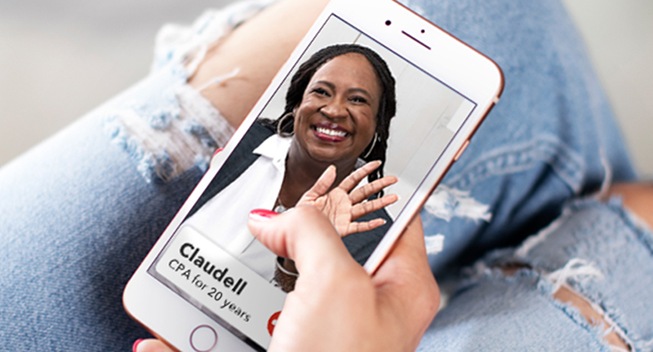
Left: The service blueprint — customer journey from filing start to confident submission mapped across front stage, line of visibility, back stage, and support systems. Right: The 2018 POC launch — CPA Claudell live on mobile, on-demand tax expertise made real for the first time
Key Design Decision
Every stakeholder pushed for scheduled appointments. Predictable CPA capacity, manageable demand, safer operationally. We pushed back. The research was unambiguous: the moment of need doesn't happen on a schedule. A filer hits the wall at 11pm on a Tuesday in February, and if the answer is "book an appointment for Thursday," they close the laptop. The anxiety dissipates, they tell themselves they'll come back, and most don't. The product had to meet the customer at the exact moment of friction — or it wasn't solving the problem.
- Filing anxiety peaks in the evening — appointments don't exist then
- 4-day wait breaks the filing session. Most users don't return
- Scheduling friction is the competitor's advantage — CPAs charge $400 for the same model
- Expert arrives in the session context — sees exactly where the customer is stuck
- No appointment, no mode switch — single CTA inline in the flow
- Customer files that night. Expert is available at the moment of maximum intent
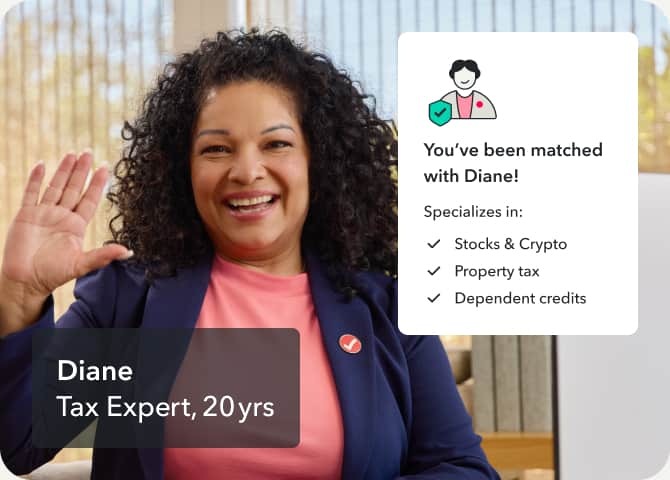
Left: Scheduled (rejected) vs. on-demand (shipped) — the expert appears now, no appointment, no mode switch, no broken session. Right: The matching experience — CPA credentials and specialization visible before the first word is spoken, building trust before the session begins
Final Design
The shipped product: a credentialed CPA or tax expert, one tap away, appearing in a live session with full context of where the filer was stuck, able to annotate the screen directly, answer the question, and watch the filer complete the step in real time. From broken link to resolved — in a single session. What we designed wasn't a customer service feature. It was a new category of tax service: the expertise of a CPA at the accessibility of a click, at a price point viable for tens of millions of filers who previously had only two choices — guess alone or pay $400 and drive somewhere.

A tax expert with 19 years of experience, live on screen, in the filing session, at exactly the moment the filer needed them — this is what thousands of on-demand CPAs delivering in real time looks like
Outcomes
TurboTax Live didn't just succeed — it changed what DIY taxes meant. The product we built in one POC season with three people became Intuit's most important product, generating hundreds of millions in revenue and establishing a new category of financial service. Thousands of credentialed tax professionals are now one click away from the moment a filer gets stuck. The broken links that sent 60% of Americans to an accountant's office became the feature that kept them — and the people who would never have attempted DIY taxes at all — in TurboTax. We didn't improve a product. We changed the game.