The Problem
Enterprise teams running complex technical programs — infrastructure migrations, cloud transitions, multi-team rollouts — were losing critical context at every seam. Zoom calls generated action items that never made it into any tracking system. Sprint capacity problems only surfaced when engineers were already buried. Risk lived in someone's head, not in the product. The result was the same story every PM knows: delays from missed blockers, hours lost to manual status chasing, and escalations that happened too late to change anything.
The brief: build an AI-native work management product from zero — not a to-do list with AI bolted on, but a system where AI is the connective tissue. Capturing decisions from meetings automatically, turning them into assigned tasks, detecting capacity overloads before they derail sprints, and surfacing risk the moment it appears rather than after it's already a crisis.
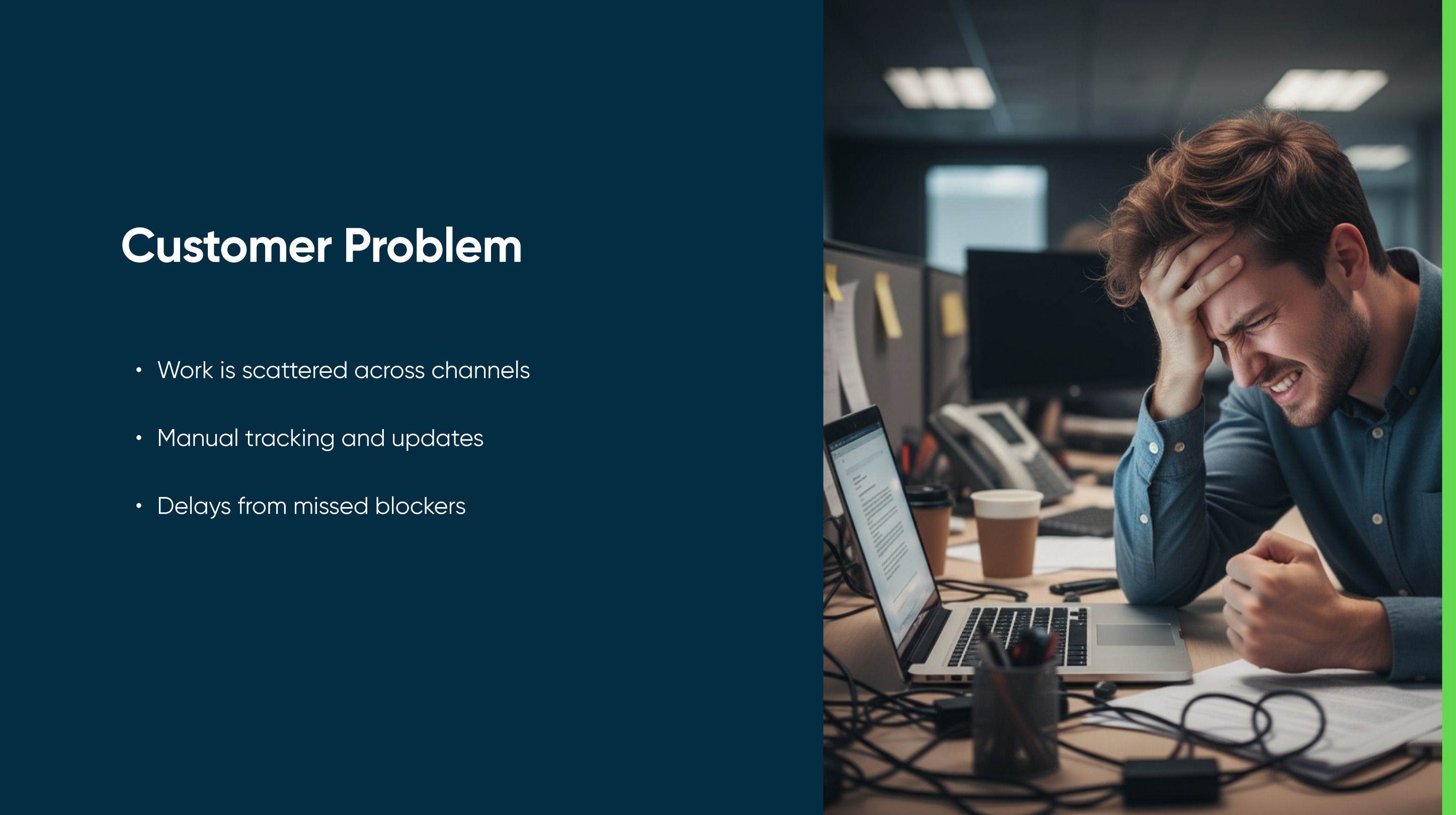
Work is scattered across channels, tracking is manual, and blockers are only visible after the damage is done — the three failure modes CWM was built to eliminate
Research & Discovery
We partnered with research to study how enterprise infrastructure teams actually run projects — contextual inquiry with engineers, PMs, and leads across migration programs. The finding that shaped everything: the biggest coordination failures didn't happen in any single tool. They happened in the gaps between them.
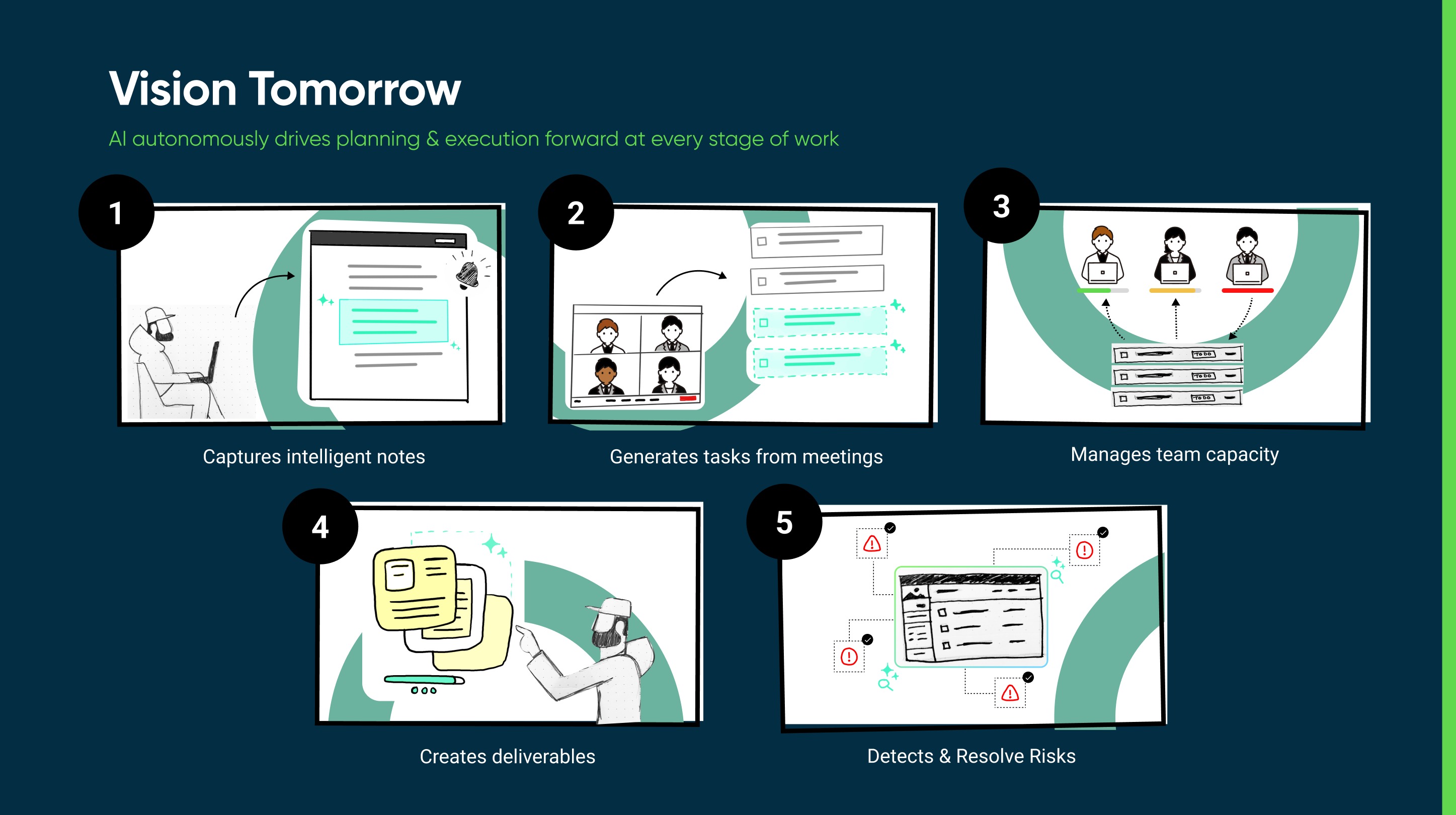
Our team synthesized this into the "Vision Tomorrow" framework — five stages where AI could close those gaps: intelligent note capture, meeting-to-task generation, capacity management, deliverable creation, and proactive risk detection. That framework became the product roadmap.
Design Process
We designed the end-to-end AI workflow in three layers. First: the Zoom integration — Now Assist captures the meeting transcript and auto-generates a structured doc in CWM the moment the call ends, surface-linking action items directly in the text. Second: intelligent task extraction — Now Assist reads the doc, identifies 4 potential actions, assigns owners, and adds them to the sprint board with one click. Third: capacity management — the sprint planning view monitors team load in real time, flags overloads at 150%, and recommends exactly which stories to move and where. Our team's design challenge was making each of these feel like one coherent product, not three separate AI features.
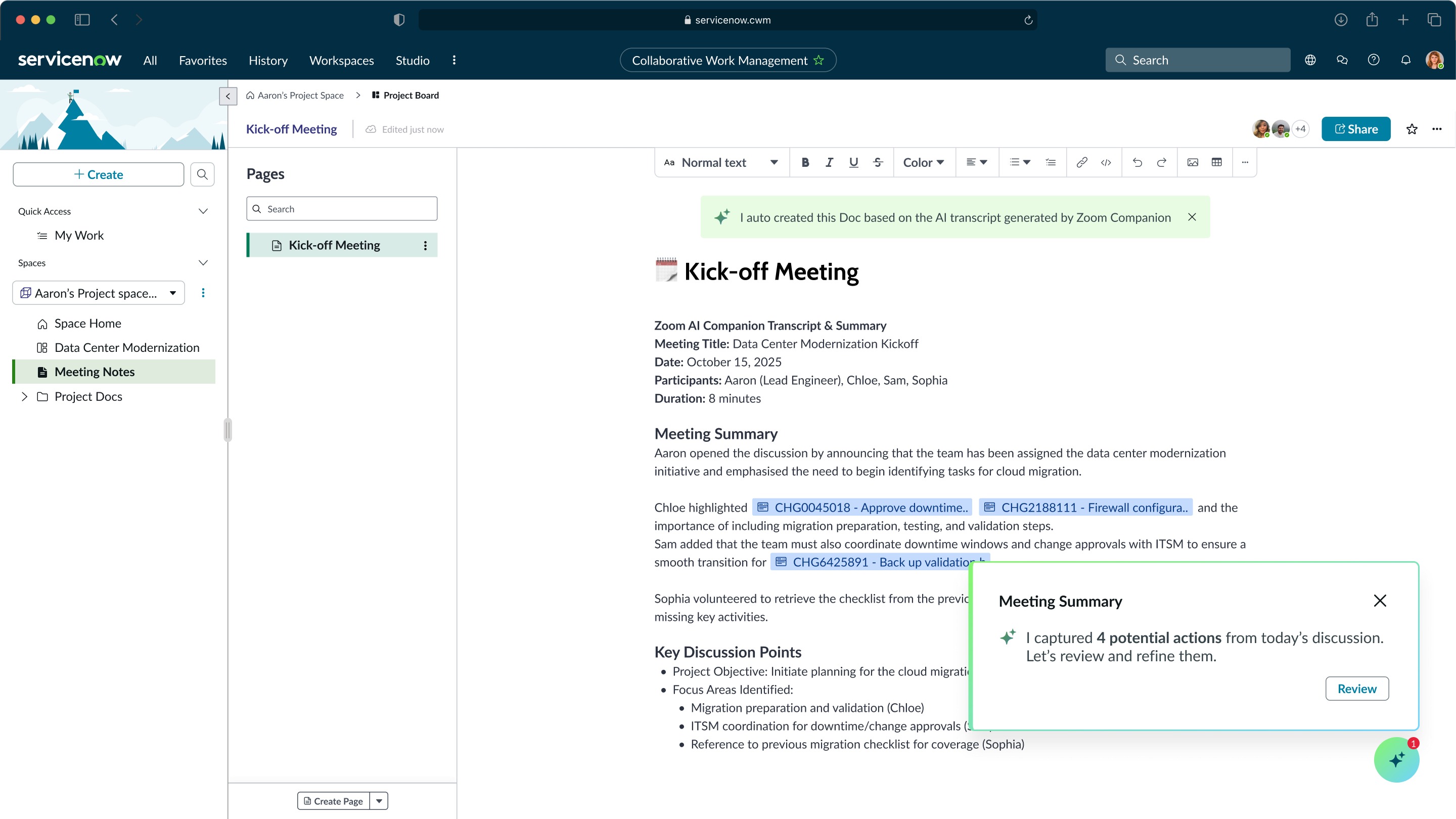
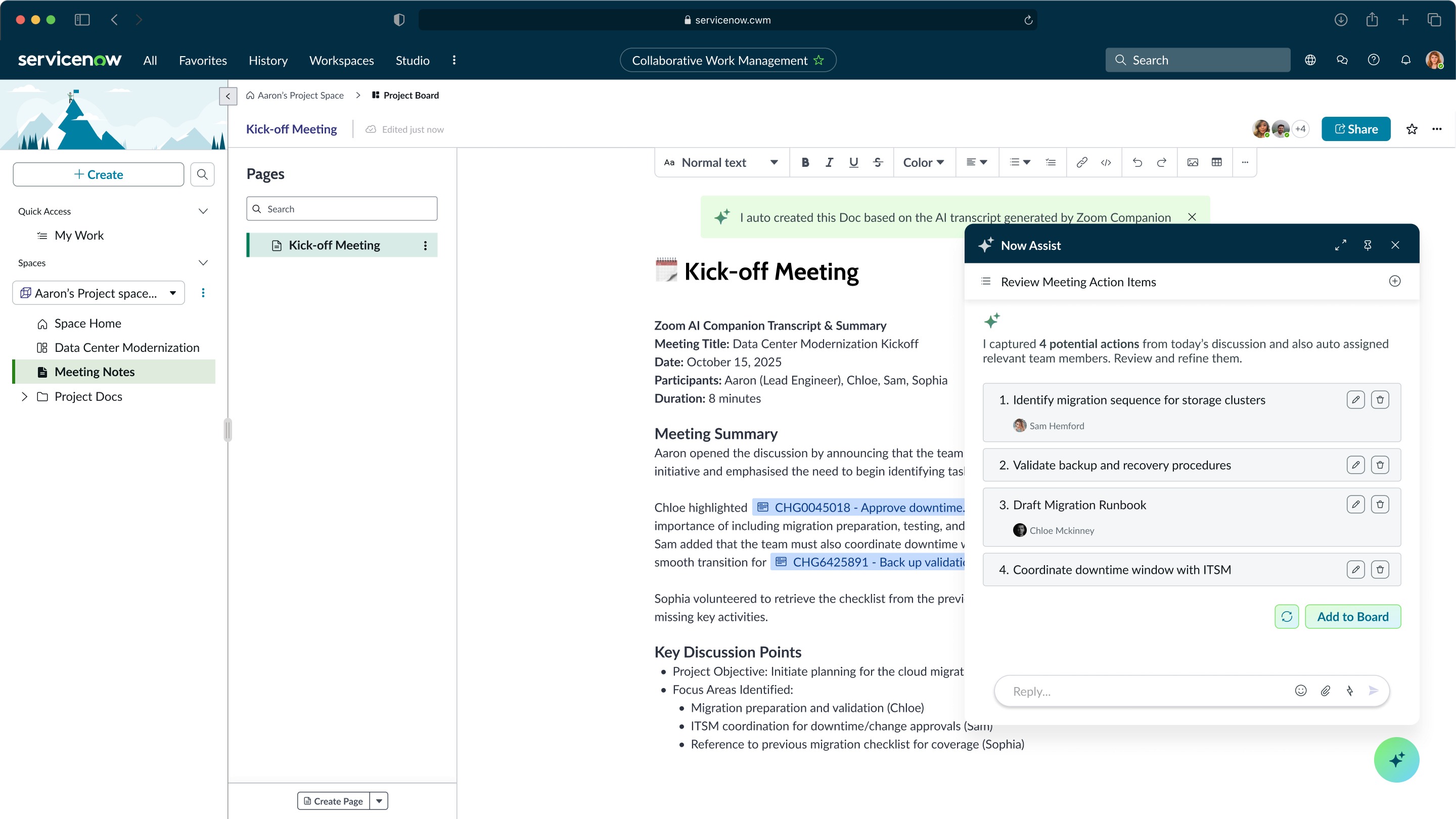
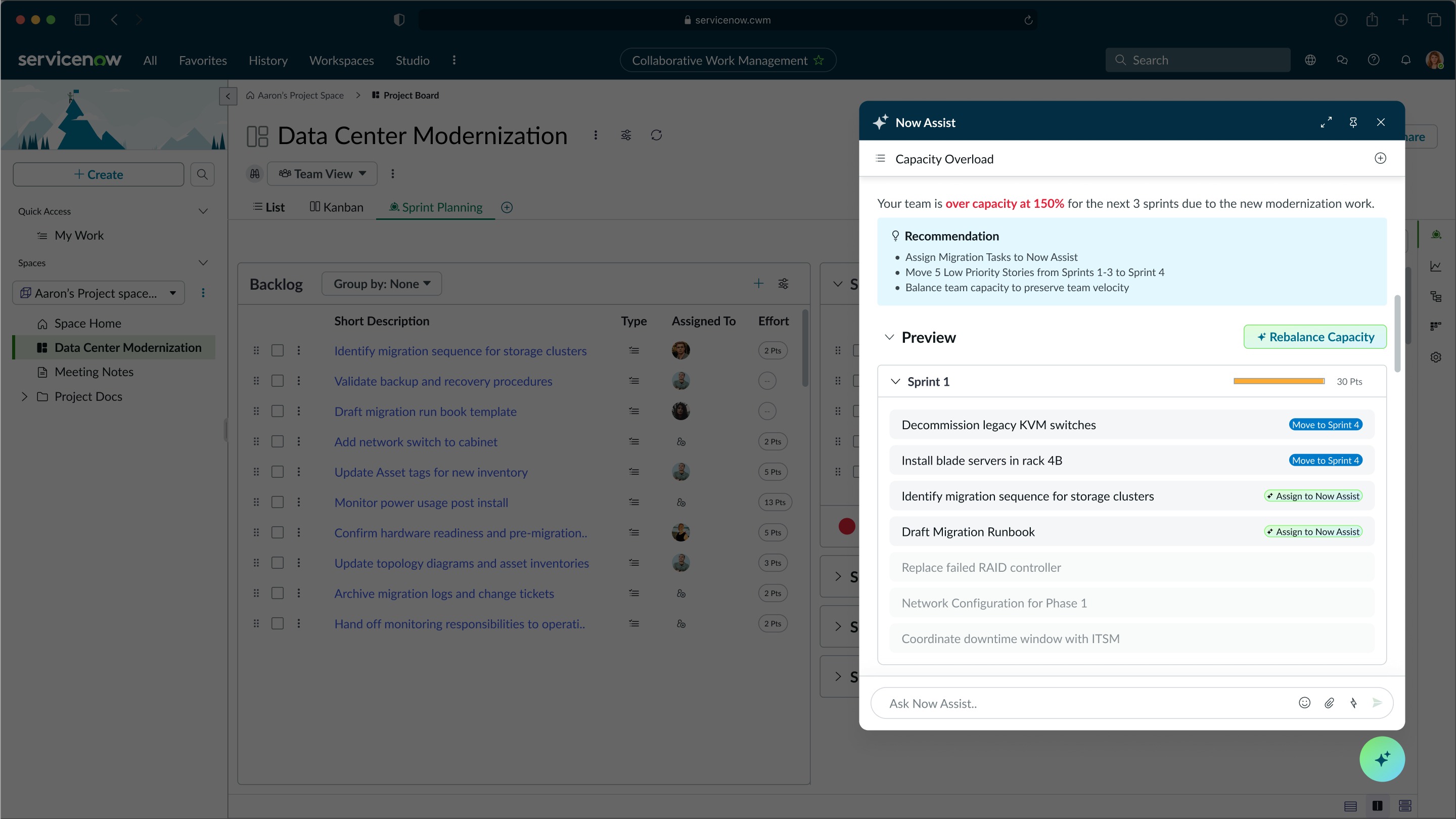
Left: AI Companion auto-generates the meeting doc from Zoom transcript, linking action items inline. Center: Now Assist surfaces 4 extracted actions for one-click task creation. Right: Capacity overload detected at 150% — Now Assist recommends a rebalance and executes it.
Key Design Decision
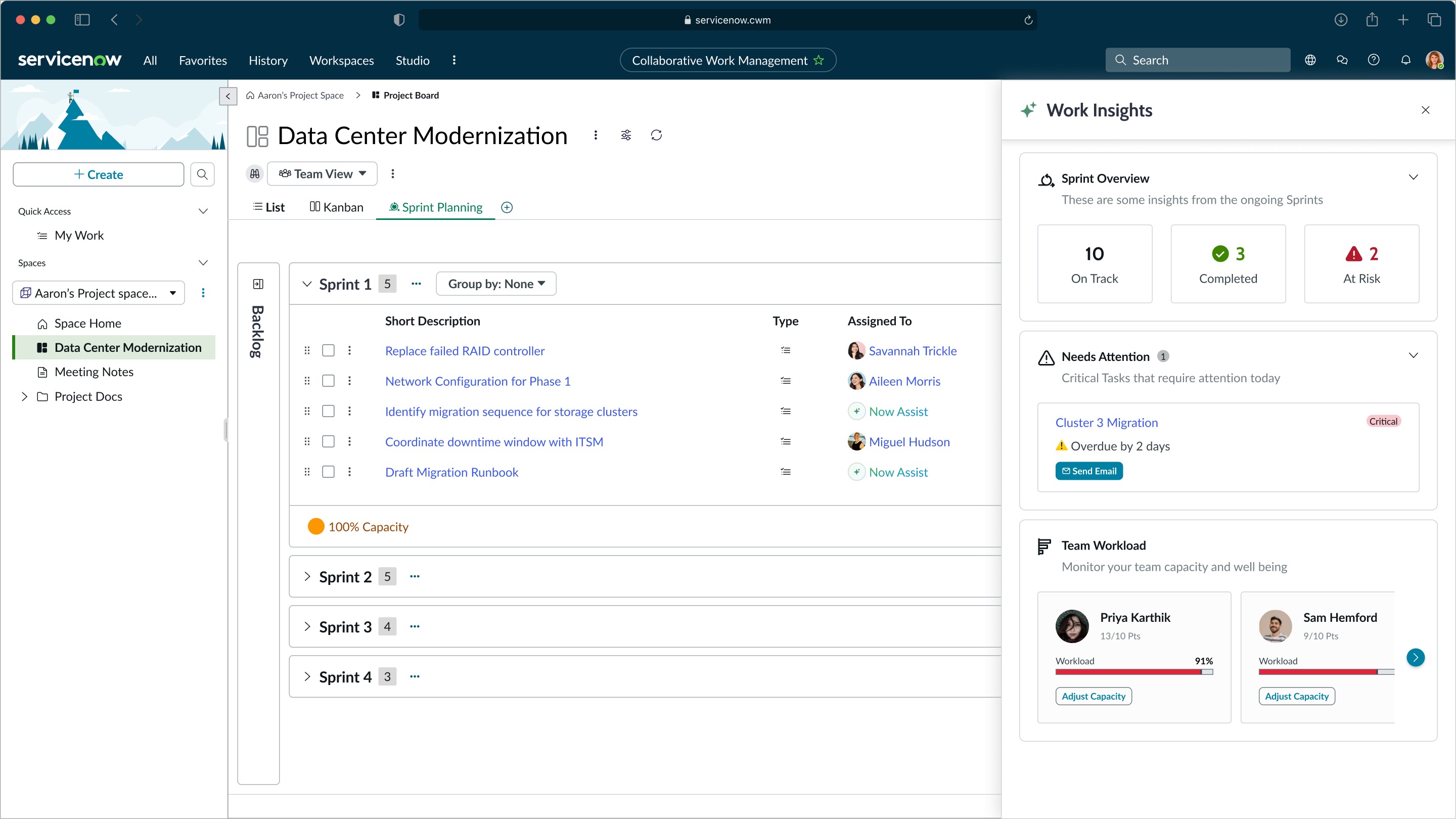
Work Insights detects Cluster 3 Migration at risk, flags it in the sprint board, and surfaces a pre-drafted escalation email — all without the PM leaving the project view
Final Design
The full CWM + Now Assist experience: a data center migration team goes from Zoom kickoff → auto-generated project doc → AI-extracted tasks → sprint board → capacity overload detected and rebalanced → risk surfaced and escalated → sprint ships on time. Every AI action is one click. Every handoff between tools is eliminated. The confetti at the end isn't just a detail — it was a deliberate design choice to make shipping feel like the win it actually is.
Outcomes
CWM proved that AI in enterprise work management isn't about replacing the PM — it's about eliminating the coordination tax. Every manual status update, every missed action item, every capacity surprise that derails a sprint: our team designed a system that handles all of it. The product shipped as the fastest adopted in SPM history and became the blueprint for how Now Assist integrates across the entire ServiceNow platform.